 CoreNutriGuide
Introduction to Energy Balance
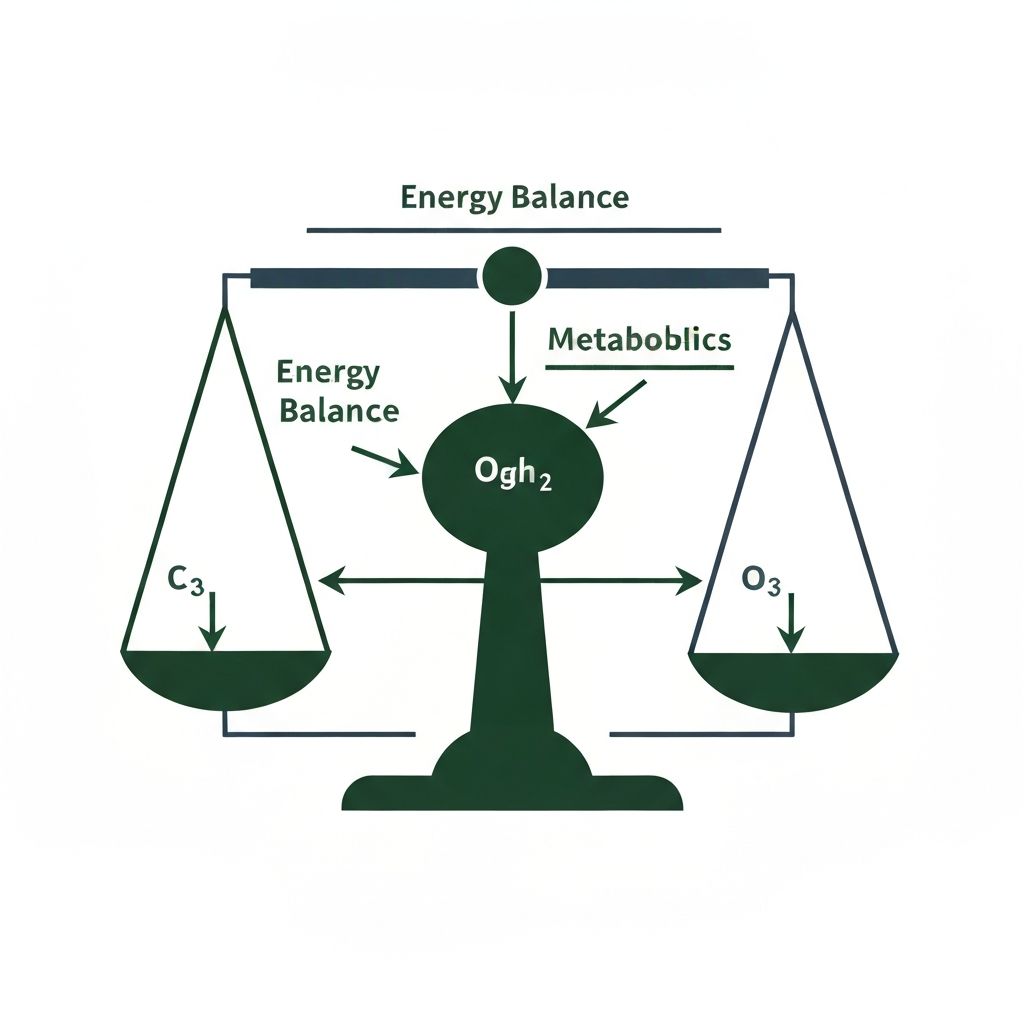
Energy balance represents the relationship between energy intake and energy expenditure. This fundamental concept provides a framework for understanding how the human body stores, utilizes, and processes the energy derived from food. While energy balance is conceptually simple, the biological mechanisms underlying it are complex and involve multiple interacting systems.
Components of the Energy Balance Equation
Energy Intake (EI) refers to the total energy consumed from food and beverages. This value is measured in calories or kilocalories (kcal). Energy intake varies based on food choices, portion sizes, eating frequency, and environmental factors. Individual eating patterns produce different total daily energy intakes despite similar nutritional needs.
Total Energy Expenditure (TEE) comprises all the energy the body uses and can be divided into three main components:
1. Basal Metabolic Rate (BMR) represents the energy required for basic physiological functions at rest—maintaining heart rate, breathing, protein synthesis, and cellular processes. BMR accounts for the largest proportion of daily energy expenditure in sedentary individuals, typically 60-75% of total daily expenditure. BMR varies based on body composition, age, sex, and hormonal status.
2. Thermic Effect of Food (TEF), also called diet-induced thermogenesis, represents the energy cost of digesting, absorbing, and processing nutrients. Different macronutrients produce different thermic effects: protein requires approximately 20-30% of its energy content for processing, carbohydrates require 5-10%, and fats require 0-3%. TEF typically accounts for 10% of daily energy expenditure.
3. Activity Energy Expenditure (AEE) encompasses both structured exercise and non-exercise activity thermogenesis (NEAT)—the energy cost of daily activities like walking, occupational work, and fidgeting. AEE varies substantially among individuals based on physical activity level and occupation, ranging from 15-30% of daily expenditure.
The Simple Equation and Complex Reality
The basic formulation appears straightforward:
Energy Intake − Energy Expenditure = Energy Balance
However, this equation masks significant biological complexity. Energy intake is measured from food labels, which often contain measurement errors. Actual nutrient bioavailability depends on food form, cooking method, and individual digestive factors. Energy expenditure cannot be directly measured and must be estimated using various methodologies that produce different results.
Energy Storage and Mobilization
When energy intake exceeds expenditure, the excess energy is stored primarily as body fat through a process called lipogenesis. Small amounts of excess energy are also stored as muscle glycogen and liver glycogen. The capacity for carbohydrate storage is limited (approximately 500g total), while fat storage capacity is virtually unlimited.
When energy expenditure exceeds intake, the body mobilizes stored energy through lipolysis (fat breakdown) and gluconeogenesis (glucose production from non-carbohydrate sources). The hierarchy of fuel mobilization depends on the duration and magnitude of the deficit, with carbohydrate stores being rapidly depleted before significant fat mobilization occurs.
Individual Variation in Energy Balance Response
Despite identical energy intake and activity levels, individuals show different patterns of weight and body composition change. This variation arises from differences in:
Metabolic Efficiency: Some individuals show greater efficiency in storing excess energy as fat, while others show greater losses through heat production (thermogenesis). Genetic factors and prior nutritional history contribute to these differences.
Macronutrient Utilization: Different macronutrient distributions produce different metabolic responses. High-protein diets produce greater thermic effects compared to high-carbohydrate diets at equivalent energy intakes.
Hormonal Responses: Individual variation in insulin sensitivity, leptin signaling, and other hormonal factors influences how the body allocates incoming energy between oxidation and storage.
Adaptive Thermogenesis: The magnitude of metabolic adaptation to sustained energy restriction varies among individuals. Some individuals show substantial reductions in metabolic rate during prolonged caloric deficit, while others show minimal adaptation.
Dynamic vs. Static Energy Balance
Energy balance is not a fixed state but a dynamic equilibrium. When energy intake increases, the body typically increases energy expenditure through increased activity levels and thermogenesis. Similarly, when energy intake decreases, the body reduces expenditure partly through metabolic adaptation and partly through reduced spontaneous activity.
These compensatory mechanisms mean that sustained weight loss or gain requires overcoming the body's homeostat—its tendency to maintain established body weight and composition. The strength of these compensatory mechanisms varies among individuals and increases with the magnitude of energy imbalance.
Implications for Understanding Energy Dynamics
Understanding the energy balance equation provides a framework for comprehending how nutrient intake relates to body weight. However, energy balance operates as part of a larger system involving hormonal regulation, genetic factors, and behavioral patterns. The equation describes what happens (weight change) but requires additional context to explain why individuals respond differently to the same energy intake.
Population studies demonstrate clear relationships between energy intake, physical activity, and body weight patterns. However, at the individual level, the relationship between these variables is mediated by multiple biological and behavioral factors that create substantial variation in outcomes.
Conclusion
The core energy balance equation—intake minus expenditure equals change in stored energy—provides essential conceptual framework for understanding human metabolism. However, this simple equation encompasses considerable biological complexity in how energy is measured, utilized, and stored. Recognizing both the utility and limitations of this framework is essential for understanding nutritional science.